We all love spoiling our furry companions, but those extra treats and generous handfuls of kibble add up fast. Canine obesity has become one of the most pressing health concerns for pet parents, with overfeeding being the primary culprit behind those gradual (and not-so-gradual) weight gains. The good news? 2026’s generation of automatic dog feeders has evolved far beyond simple timers, offering sophisticated solutions that take the guesswork—and guilt—out of portion control while ensuring your pup gets exactly what they need, when they need it.
Gone are the days of eyeballing scoops or giving in to those manipulative puppy-dog eyes during dinner prep. Today’s smart feeding systems leverage artificial intelligence, precision weighing sensors, and veterinary-guided programming to create personalized nutrition schedules that adapt to your dog’s unique needs. Whether you’re managing a breed prone to weight gain, juggling a busy schedule that leads to inconsistent feeding times, or simply want to break the cycle of overfeeding, understanding how these advanced features work will transform your approach to your dog’s dietary health.
Top 10 Automatic Dog Feeders
Detailed Product Reviews
1. Automatic Dog Feeder Large Breed: 12L/50 Cups with HD 1080P Camera - 5G WiFi Anti-Clog Timed Dog Feeder for Golden Retriever Busy Owners by UTCG

Overview: This heavy-duty automatic feeder targets large breed owners with its massive 12L capacity, storing 15-20 days of food for Golden Retrievers, German Shepherds, and similar sized dogs. The integrated 1080P HD camera with two-way audio allows remote monitoring and interaction via iOS/Android apps. It schedules up to 15 daily meals with portion control, while a silicone stirring paddle prevents kibble clogging—critical for large breeds eating bigger kibble.
What Makes It Stand Out: The anti-clog mechanism with an 18mm-wide outlet and stirring paddle directly addresses the biggest failure point in large-breed feeders. The dual power system (adapter + battery backup) ensures reliability during outages, and the weighted, anti-slip base adds stability against enthusiastic eaters. Custom voice recording helps reduce separation anxiety by calling pets to meals with your voice.
Value for Money: Priced in the premium segment for smart feeders, it justifies cost through large-capacity engineering and robust anti-clog design that cheaper models lack. Comparable units with camera functionality cost 20-30% more from premium brands. For large dog owners, the 15-20 day refill interval saves significant time and reduces emergency refill trips.
Strengths and Weaknesses: Strengths: Massive capacity for large breeds; proven anti-clog system; dual power backup; stable weighted base; HD camera with two-way audio; BPA-free construction. Weaknesses: Large footprint requires ample space; plastic bowl rather than stainless steel; app connectivity can be finicky with 5GHz networks; cleaning the hopper requires disassembly.
Bottom Line: Ideal for large breed owners who travel or work long hours. The anti-clog reliability and dual power backup make it worth the investment, despite minor app quirks. Recommended for dogs over 50 pounds.
2. Automatic Dog Feeder Large Breed with Camera - 12L/50 Cups 5G WiFi App Control Dog Food Dispenser, Easy Setup, HD 1080P Video with Night Vision by Yakry

Overview: The Yakry feeder matches the UTCG’s 12L capacity but emphasizes ease of setup and night vision capabilities. Designed for multiple pets or large dogs, it stores 50 cups of kibble and connects via the Smart Life app on both 2.4GHz and 5GHz WiFi. The HD camera includes night vision for 24/7 monitoring, while two-way audio maintains owner-pet connection during absences.
What Makes It Stand Out: Superior night vision sets this apart for owners checking evening meals or monitoring nocturnal pets. The airtight lid with integrated desiccant pack actively preserves food freshness—a feature often overlooked in large-capacity feeders. The Smart Life app ecosystem integrates with other smart home devices, creating a unified control experience.
Value for Money: Competitively priced against similar camera-equipped large feeders, it offers better nighttime monitoring at no extra cost. The desiccant system extends food freshness, reducing waste from stale kibble. For multi-pet households, the 50-cup capacity eliminates buying multiple units, saving $50-100 compared to dual-feeder setups.
Strengths and Weaknesses: Strengths: Excellent night vision; airtight freshness system; dual-band WiFi compatibility; Smart Life app integration; large capacity for multi-pet homes. Weaknesses: No anti-clog paddle mentioned; single power source (no battery backup); plastic construction may scratch; portion accuracy varies with kibble shape; setup can require router adjustments.
Bottom Line: Best for tech-savvy owners prioritizing nighttime monitoring and food freshness. Lacks power backup but excels in connectivity and storage. Perfect for multi-pet families with consistent schedules.
3. UTCG Automatic Dog Feeder with Camera: 8L/33 Cups 5G WiFi Timed Food Dispenser for Medium Dogs - 1080P HD Night Vision Video Recording 2-Way Audio APP Control
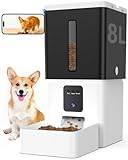
Overview: This scaled-down UTCG model targets medium dogs with an 8L capacity holding 33 cups of food. It maintains the brand’s camera-centric design with 1080P HD video, night vision, and two-way audio for remote interaction. The app supports up to 15 daily meals with precise portion control, making it suitable for weight management or frequent small meals for older medium breeds like Corgis or Bulldogs.
What Makes It Stand Out: Night vision capability at this mid-range price point is uncommon, giving owners clear visuals during early morning or late evening feeds. The two-way audio system includes listening functionality, not just broadcasting, allowing owners to hear distress signals. The 5G WiFi support ensures stable video streaming without buffering, crucial for real-time monitoring.
Value for Money: Positioned $20-30 below the 12L models, it offers proportional value for medium dog owners who don’t need excess capacity. The feature set rivals premium small-breed feeders costing $50 more. For 30-50 pound dogs, the 33-cup capacity provides 10-14 days of feeding, balancing size and freshness better than larger hoppers.
Strengths and Weaknesses: Strengths: Night vision included; 5G WiFi stability; two-way audio with listening; 15-meal scheduling; appropriately sized for medium breeds; BPA-free materials. Weaknesses: No anti-clog mechanism specified; single power source; smaller kibble recommended; app interface less intuitive than competitors; no desiccant system for freshness.
Bottom Line: Excellent value for medium dog owners wanting camera monitoring without overpaying for unused capacity. The night vision and 5G support make it technologically current. Recommended for dogs 25-55 pounds.
4. PETLIBRO Automatic Cat Feeder, 5G WiFi Automatic Dog Food Dispenser with Freshness Preservation, 5L Timed Pet Feeder with Low Food Sensor, Up to 10 Meals Per Day, Granary Black
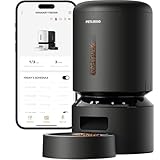
Overview: PETLIBRO’s 5L feeder prioritizes food freshness and hygiene over raw capacity, making it ideal for small to medium pets. The patent rotor and twist-lock lid prevent unauthorized access, while a desiccant bag and sealing strip maintain kibble crunch. It schedules up to 10 meals daily with 1-48 portions per meal, and includes a low food sensor with smartphone alerts. The stainless steel bowl prevents chin acne—a health-conscious detail.
What Makes It Stand Out: The freshness preservation system is best-in-class, with a physical rotor blocking food access and a desiccant actively controlling moisture. The low food sensor provides proactive alerts before running empty—unlike reactive systems. The stainless steel bowl addresses dermatological health concerns rarely considered by competitors. Smart indicators light up red for multiple failure modes, providing at-a-glance status.
Value for Money: Mid-range pricing delivers premium freshness features typically found in $150+ units. The stainless steel bowl alone adds $15-20 value. For small dogs or cats, the 5L capacity is optimal—large enough for a week but small enough to maintain freshness. It avoids waste from stale food, saving money long-term.
Strengths and Weaknesses: Strengths: Superior freshness system; low food sensor; stainless steel bowl; smart failure notifications; patent anti-theft rotor; 5G WiFi. Weaknesses: Limited to 10 meals/day (vs 15 in competitors); 5L capacity insufficient for large breeds; no camera for monitoring; portion size less flexible for large kibble; setup requires patience.
Bottom Line: Perfect for health-conscious owners of cats and small dogs who prioritize food freshness over camera monitoring. The sensor and stainless steel bowl justify the price. Skip if you need visual monitoring or have pets over 40 pounds.
5. Frienhund Automatic Cat Feeder with 2K Camera: 5G WiFi Automatic Dog Feeder with Night Vision,Cat Food Dispenser with 7L Large Food Storage Container for Multiple Pet,Detachable for Easy Clean -29 Cup
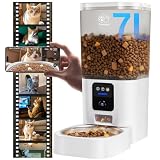
Overview: The Frienhund feeder balances capacity and technology with a 7L hopper and standout 2K (3MP) camera—higher resolution than typical 1080P units. It supports up to 15 meals daily with 20 portions per meal, catering to multi-pet households. Motion detection triggers recording to TF cards (up to 128GB) or cloud storage, capturing pet activity beyond feeding. Two-way audio with volume control accommodates sound-sensitive animals.
What Makes It Stand Out: The 2K camera resolution is a clear differentiator, providing sharper images for detail-oriented owners. Motion detection with recording transforms it into a pet camera, not just a feeder viewer. Dual storage options (local TF and cloud) prevent footage loss. The 7L capacity hits a sweet spot—larger than 5L units but more compact than 12L behemoths, suitable for two small pets or one medium dog.
Value for Money: Priced competitively with 1080P camera models, the 2K upgrade costs nothing extra. The motion detection and recording features add $40-60 value compared to standalone pet cameras. For multi-pet homes, it replaces separate feeder and camera systems, saving $80-100. The detachable design reduces cleaning time, a practical long-term benefit.
Strengths and Weaknesses: Strengths: 2K camera resolution; motion detection with recording; dual storage options; volume-adjustable audio; 7L multi-pet capacity; detachable for cleaning. Weaknesses: No anti-clog system mentioned; single power source; no desiccant for freshness; app can be laggy; night vision range limited to 10 feet; setup requires QR code scanning.
Bottom Line: Best camera quality in its class makes this ideal for owners wanting detailed monitoring and activity recording. The motion detection adds security value. Recommended for multi-pet households or medium dogs where visual clarity matters most.
6. Large Dog Automatic Feeder with Camera: 12L/50 Cups Home Smart Dog Feeder for 20 Days Feeding - Anti-Clog with 20mm Wide Chute for Big Breed Owner
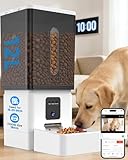
Overview: This smart feeder addresses the specific needs of large dog owners who worry about mealtime when away. With a 12L capacity holding 50 cups of kibble, it can sustain a large breed for up to 20 days. The integrated HD camera with two-way audio lets you visually check on your pet and provide reassurance through voice interaction, while the anti-clog design with a 20mm wide chute handles large kibble without jamming.
What Makes It Stand Out: The combination of visual monitoring and feeding sets this apart from basic dispensers. The 20mm chute specifically accommodates large breed kibble, solving a common pain point. Its transparent window allows quick food level checks, and the tip-resistant design adds stability against enthusiastic eaters. The WiFi connectivity enables remote management through a smartphone app, making it truly hands-off for busy families.
Value for Money: Priced in the mid-range for smart feeders, this unit justifies its cost through camera integration and large-breed-specific engineering. While cheaper gravity feeders exist, they lack portion control and monitoring. Compared to premium models with similar features, this offers solid functionality without excessive cost, making it accessible for most large dog households.
Strengths and Weaknesses: Pros include the HD camera for visual confirmation, two-way audio for pet comfort, generous 12L capacity, and reliable anti-clog mechanism. The tip-resistant base enhances safety. Cons involve potential WiFi connectivity issues in some homes, a learning curve for app setup, and the need for regular cleaning of the camera lens. Battery backup is mentioned but specifics on duration are limited.
Bottom Line: Ideal for large dog owners who want peace of mind through visual monitoring, this feeder balances smart features with practical design. It’s best for tech-comfortable users willing to invest in their pet’s wellbeing and their own convenience.
7. Automatic Dog Feeder for Large Dogs, 14L Capacity, Remote Feeding, Anti-Blockage System, Timed Auto Dog Food Dispenser, 2.4G WiFi App Control,Dual Power Supply,Stainless Steel Bowl

Overview: This app-controlled automatic feeder delivers convenience for medium to large dogs with its impressive 14L capacity. Managing up to six meals daily with 1-60 portions per meal, it provides flexible scheduling for pets with varied dietary needs. The stainless steel bowl ensures hygienic feeding, while dual power supply options guarantee uninterrupted operation during outages.
What Makes It Stand Out: The 14L capacity supports up to 30 days of feeding, reducing refill frequency significantly. Its powerful anti-blockage system handles large kibble and freeze-dried food without jamming, a critical feature for large breeds. The ability to record a 10-second voice message adds a personal touch that comforts pets during solitary meals. Dual power with 84-day battery backup provides exceptional reliability.
Value for Money: Competitively priced against similar smart feeders, this model offers exceptional value through its extra-large capacity and robust anti-jam technology. The inclusion of a stainless steel bowl—a healthier alternative to plastic—adds value. While basic feeders cost less, the remote app control and reliable dual power justify the moderate price premium for busy pet parents.
Strengths and Weaknesses: Strengths include the massive 14L capacity, flexible meal scheduling, reliable anti-blockage system, and excellent dual power redundancy. The voice message feature enhances pet comfort. Weaknesses are limited to 2.4G WiFi only (no 5G support), potentially complex initial setup for non-tech users, and battery life claims that may vary with usage patterns and food type.
Bottom Line: Perfect for owners of medium to large dogs who travel or work long hours, this feeder combines capacity, reliability, and smart features. The dual power supply makes it particularly dependable for households concerned about power interruptions.
8. Amazon Basics Automatic Pet Water Dispenser and Gravity Food Feeder Set for Cat and Dog, Easy to Clean, 6-Pound Food Capacity, 1-Gallon, Small, Gray, Pack of 2
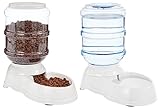
Overview: This gravity-powered set from Amazon Basics provides a no-frills solution for pet feeding and hydration. The combo includes a 6-pound capacity food dispenser and a 1-gallon water dispenser, both operating without electricity. Transparent hoppers allow easy monitoring of levels, while anti-skid rubber feet keep the units stable during use. Designed for cats and small dogs.
What Makes It Stand Out: Simplicity is this set’s greatest asset—no apps, batteries, or programming required. The gravity system ensures continuous availability of food and water, making it foolproof. Side cut-out handles facilitate easy lifting and cleaning, while the extra-wide entry simplifies refilling. The pack-of-two configuration offers complete feeding and hydration solution in one purchase.
Value for Money: Exceptionally affordable, this set costs significantly less than electronic alternatives. For budget-conscious pet owners or those seeking a reliable backup system, it delivers outstanding value. While lacking portion control, it provides basic needs reliably. The durable plastic construction ensures longevity, making it a cost-effective long-term investment for appropriate pet sizes.
Strengths and Weaknesses: Pros include unbeatable simplicity, no power requirements, easy cleaning, stable anti-skid design, and excellent affordability. The transparent hoppers are practical. Cons involve no portion control (risk of overeating), limited to small kibble and small pets, inability to schedule meals, and potential for food staleness. Not suitable for pets needing dietary management.
Bottom Line: Best suited for cat owners or those with small dogs who need a simple, reliable feeding solution. It’s ideal as a primary feeder for free-feeding pets or as a backup during power outages. Don’t expect smart features, but count on consistent performance.
9. Automatic Dog Feeder for Large Breed - 15L/ 63 Cups Anti-Clog Dog Food Dispenser for 2-23mm Kibble, Elevated Stand, Large Food Tray, Dual Power, Up to 50 Portions 6 Meals Per Day, Keeps Fresh
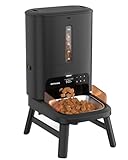
Overview: Engineered specifically for large breeds like German Shepherds and Labradors, this feeder boasts a massive 15L capacity holding 63 cups of kibble. The standout feature is its adjustable elevated stand, promoting healthier eating posture for big dogs. It handles kibble sizes from 2-23mm and dispenses up to 50 portions per meal across six daily meals, making it ideal for multi-pet households.
What Makes It Stand Out: The optional elevated stand with two height settings addresses ergonomic feeding for large and senior dogs, reducing neck strain and aiding digestion. Its widened food channel and reinforced dispensing system reliably handle oversized kibble without jamming. The transparent viewing window and 15-day capacity provide exceptional convenience for extended absences, while dual power ensures continuous operation.
Value for Money: Positioned at a premium price point, this feeder justifies the cost through breed-specific engineering and ergonomic benefits. The elevated stand adds significant value for large dog health. While more expensive than basic models, the anti-clog reliability and huge capacity make it cost-effective for owners of giant breeds or multiple large dogs who need dependable performance.
Strengths and Weaknesses: Pros include the largest capacity (15L), adjustable elevated feeding position, superior anti-clog handling of 2-23mm kibble, generous 50-portion per meal maximum, and dual power backup. The transparent window is practical. Cons are its bulky footprint requiring substantial space, higher price point, and potentially excessive capacity for single small dogs.
Bottom Line: The ultimate choice for large breed owners prioritizing their dog’s physical comfort and feeding reliability. If you have a Golden Retriever, Rottweiler, or similar sized dog, this feeder’s ergonomic design and jam-free operation make it worth the investment.
10. Automatic Cat Feeder, 4L Cat Food Dispenser with 10s Voice Recorder, Pet Feeder up to 8 Meals per Day, Timed Dog Feeder with Dry Food Sealed Ring

Overview: Designed primarily for cats but suitable for small dogs, this 4L automatic feeder emphasizes food freshness and smooth operation. It schedules up to eight meals daily—more than most competitors—and includes a sealed ring with desiccant to prevent moisture and mold. The 10-second voice recorder calls pets to meals, while an 8-degree tilted bowl promotes comfortable eating.
What Makes It Stand Out: The freshness-focused design with desiccant placement and sealed lid prevents food spoilage, a unique feature in this category. The food swinging device ensures consistent dispensing without shaking, while the 8-degree tilted bowl enhances pet comfort. Eight daily meals support “little and often” feeding patterns ideal for feline health, and the anti-theft lid design prevents clever pets from accessing stored food.
Value for Money: This mid-priced feeder offers excellent value for cat owners through its freshness preservation features and flexible meal scheduling. While capacity is modest compared to large dog feeders, the specialized design for maintaining food quality justifies the cost. It’s competitively priced against similar cat feeders but adds unique moisture-control benefits that protect expensive prescription diets.
Strengths and Weaknesses: Pros include superior food freshness protection, eight-meal scheduling flexibility, anti-blockage swinging mechanism, tilted ergonomic bowl, dual power options, and voice recording. The desiccant system is innovative. Cons are the 4L capacity limiting use for medium+ dogs, potential complexity in desiccant maintenance, and the smaller food tray may not suit multiple pets.
Bottom Line: Perfect for cat owners who prioritize food freshness and frequent small meals. The moisture-control features make it especially valuable for those using premium or prescription diets. While not for large dogs, it’s an excellent specialized solution for feline feeding needs.
Understanding Canine Obesity and Overfeeding Risks
The Health Impact of Overfeeding Your Dog
Carrying extra pounds isn’t just a cosmetic issue for dogs—it’s a serious health crisis that can shave years off their lifespan. Excess weight puts tremendous strain on joints, increasing the risk of painful arthritis and mobility issues even in younger dogs. The cardiovascular system works overtime, leading to heart disease and decreased stamina for the activities your dog loves. Perhaps most critically, obesity significantly raises the likelihood of developing diabetes, which requires lifelong management and daily insulin injections. Fat tissue also produces inflammatory hormones that can contribute to certain cancers, making portion control one of the simplest yet most powerful preventive measures you can take.
Behavioral Signs Your Dog is Overeating
Your dog might be trying to tell you they’re consuming too much, but not in ways you’d expect. While begging is often learned behavior rather than true hunger, watch for more subtle indicators like decreased interest in play, excessive sleeping beyond breed norms, or difficulty grooming hard-to-reach areas. Some overfed dogs develop paradoxical food obsession, constantly scavenging because their bodies aren’t properly processing nutrients. Others may show signs of digestive distress, including frequent gas, loose stools, or vomiting bile between meals—their system overwhelmed by too much food at once. These behavioral red flags often precede visible weight gain, making them early warning signs that portion control needs immediate attention.
Why Traditional Feeding Methods Fail
The classic scoop-and-pour approach is fundamentally flawed for precision nutrition. Measuring cups can vary by up to 30% in volume depending on how kibble settles, and “one cup” means something different to everyone in the household. Busy schedules lead to skipped meals followed by compensation feeding, while well-meaning family members often double-feed because communication breaks down. Emotional feeding—giving extra when we feel guilty about leaving dogs home alone—creates inconsistent calorie intake that confuses metabolism. Without objective measurement and consistent timing, even careful pet parents inadvertently create the feast-or-famine patterns that promote fat storage rather than healthy weight maintenance.
How Automatic Feeders Address Overfeeding
Precision Portion Control Technology
Modern automatic feeders in 2026 have abandoned imprecise auger systems in favor of multi-point weight verification. These devices use load cells that measure dispensed food to the exact gram, accounting for kibble density variations between brands. Advanced models feature pre-feed weighing where the hopper itself confirms remaining food levels, alerting you if manual additions have disrupted your programmed schedule. Some systems even calibrate themselves based on the specific kibble shape and size you’re using, ensuring that a “half-cup” setting delivers precisely the same calories whether you’re feeding tiny toy breed pellets or large working dog formulas.
Scheduled Feeding Intervals
Metabolism thrives on consistency, and smart feeders deliver perfectly timed meals that regulate your dog’s digestive system and energy levels. Rather than one or two large portions that can trigger fat storage, 2026 models allow for up to 12 micro-meals daily, ideal for breeds prone to bloat or dogs needing to feel satisfied throughout the day. These intervals can be customized to your dog’s activity patterns—lighter meals during rest periods, slightly larger portions before anticipated exercise. The system maintains this schedule flawlessly during your travel, late work nights, or weekend schedule changes, eliminating the metabolic disruption that contributes to weight gain.
Eliminating Human Error and Guilt Feeding
The psychological component of overfeeding often stems from our own emotions, not our dog’s actual needs. Automatic feeders remove you from the immediate feeding equation, breaking the association between your presence and food delivery. When your dog begs, you can honestly say “the feeder is in charge,” redirecting attention to play or cuddles instead of treats. These systems also create accountability through feeding logs that show exactly when and how much your dog ate, making it impossible to forget whether someone already fed them. This data-driven approach helps families coordinate care and stops the “just in case” extra scoop that derails weight management efforts.
Key Features to Look for in 2026 Models
AI-Powered Portion Optimization
The standout innovation in this year’s feeders is machine learning that adapts portions based on your dog’s consumption patterns and weight trends. By integrating with smart scales or manual weight entries, these systems can automatically reduce portions by 5-10% if they detect weekly weight gain, or increase slightly if your dog drops below ideal body condition. The AI analyzes how quickly your dog eats, whether they leave food (suggesting portions may be too large), and even factors in seasonal activity changes. This dynamic adjustment prevents the plateaus that often frustrate weight loss efforts, creating a truly responsive feeding plan that evolves with your dog’s needs.
Smart Bowl Weight Sensors
Feeding accuracy doesn’t stop at dispensing—2026’s premium models verify consumption with bowls that detect exactly how much food was actually eaten versus simply offered. These sensors can distinguish between your dog’s head weight and the remaining kibble, sending alerts if intake suddenly drops (a potential health red flag) or if another pet is stealing food. For multi-dog homes, this technology pairs with microchip recognition to ensure each dog only accesses their own measured portion, eliminating competitive overeating. The bowl’s continuous monitoring also catches system errors before they become feeding disasters, like jams that would have gone unnoticed in older models.
Multi-Pet Household Differentiation
Speaking of multiple pets, this year’s feeders have solved the chaos of coordinating different diets and portions. Microchip or collar tag recognition systems create exclusive access zones where each pet can only retrieve their specific meal. The feeder dispenses different amounts and even different foods for each animal, scheduled according to individual needs. This prevents food aggression, stops the cat from eating the dog’s prescription weight-loss kibble, and ensures the senior dog with reduced calories isn’t stealing from the high-energy younger dog’s bowl. Managing separate feeding programs becomes effortless, removing the temptation to feed everyone the same amount for convenience’s sake.
Slow Feed Mode Integration
Rapid eating contributes to overfeeding problems because dogs don’t register fullness until several minutes after starting a meal. Innovative 2026 feeders incorporate programmable slow-feed modes that dispense meals in small batches over 10-20 minutes, allowing satiety signals to catch up. Some models even include puzzle-feeder attachments that require dogs to work for their kibble, extending mealtime to 30+ minutes while providing mental stimulation. This naturally reduces the amount needed for satisfaction and prevents the post-meal begging that occurs when dogs gulp food too quickly. For breeds prone to bloat, this feature isn’t just convenient—it’s a life-saving necessity.
Real-Time Monitoring and Alerts
Connectivity has moved beyond simple smartphone notifications. Modern systems provide comprehensive dashboards showing your dog’s eating patterns, portion accuracy, and weight trends over time. You’ll receive alerts if portions are consistently left uneaten (suggesting they’re too large), if the feeder detects a jam that could cause missed meals, or if your dog’s eating speed changes dramatically. Some platforms even integrate with veterinary portals, allowing your vet to review feeding data during weight management check-ups and suggest programming adjustments remotely. This transparency turns feeding from a daily chore into a measurable health intervention.
Veterinary-Approved Programming
The best 2026 feeders come with pre-configured settings developed by veterinary nutritionists for specific scenarios: post-neuter metabolism slowdown, breed-specific weight tendencies, senior dog reduced activity, and medical conditions requiring strict portion control. These aren’t generic templates but detailed programs that account for factors like ideal weight, body condition score, and activity level. Some manufacturers partner with veterinary schools to validate their algorithms, giving you confidence that the portions recommended align with professional standards. This feature is invaluable for dogs needing to lose weight safely—typically no more than 1-2% of body weight per week—preventing the dangerous rapid weight loss that can cause liver problems.
Anti-Jam Mechanisms for Consistency
Inconsistent feeding leads to overcompensation, so reliability is paramount. 2026 models employ multiple anti-jam technologies: flexible dispensing spirals that adapt to kibble shape, vibration systems that break up clumps, and optical sensors that detect blockages before they cause missed meals. Some units feature dual dispensing mechanisms as backup, ensuring one jam doesn’t derail the entire day’s schedule. This consistency is crucial for weight management because unpredictable meal timing can cause stress eating when food finally arrives. Knowing your feeder will work flawlessly whether you’re home or away prevents the anxiety that leads to manual overfeeding “just to be safe.”
Power Backup Systems
Weight management plans fail when feeders go dark during outages. This year’s models feature lithium battery backups that last 7-10 days, maintaining full programming and connectivity even without wall power. Solar panel accessories are available for extended outages, and some units can operate indefinitely on battery alone. The system sends low-battery alerts well before failure, and programming is stored in non-volatile memory that survives complete power loss. This reliability means your dog’s carefully calibrated portions continue without interruption, preventing the metabolic confusion that comes from missed meals followed by make-up feeding.
Setting Up Your Automatic Feeder for Success
Calculating Your Dog’s Ideal Portions
Before programming anything, determine your dog’s resting energy requirement (RER) using their ideal weight—not their current weight if overweight. The formula is 70 x (ideal weight in kg)^0.75, then adjust for activity level (1.2-1.8 multiplier). Most 2026 feeders include built-in calculators that handle this math, but understanding the principle helps you make informed adjustments. Factor in treat calories, which should never exceed 10% of daily intake. For weight loss, aim for 80% of maintenance calories; the feeder’s gradual reduction feature can implement this safely over two weeks to avoid hunger strikes. Consult your vet to confirm these numbers, especially for dogs with health conditions.
Programming the Right Schedule
Dogs digest most efficiently with 2-4 meals daily, but the optimal schedule depends on your dog’s personality and your routine. For beggars, try 4-6 smaller meals to maintain satisfaction. For dogs who need to learn hunger isn’t an emergency, 2-3 meals build better discipline. Time meals to precede activity peaks—morning meal before a walk, evening meal before playtime—to encourage natural energy use. Use the feeder’s “randomize” feature (±15 minutes) to prevent anticipatory anxiety that leads to obsessive behavior around meal times. Remember to schedule a small “bedtime snack” for dogs prone to early morning vomiting from empty stomachs.
Transitioning from Manual to Automatic Feeding
Sudden changes trigger resistance, so transition gradually over 7-10 days. Start by using the feeder for one meal daily while you continue handling others, allowing your dog to associate the device with positive experiences. Place the feeder where you previously fed manually, and consider adding a worn t-shirt to the area so your scent remains part of the routine. For anxious dogs, enable the voice recording feature to call them to meals in your voice. Monitor consumption closely during week one—some dogs initially distrust the mechanical dispenser and may need portion adjustments upward temporarily to ensure they’re eating enough while adapting.
Common Mistakes That Undermine Portion Control
Overriding Pre-Set Portions Too Often
The feeder’s greatest strength is consistency, but many owners sabotage this by manually dispensing “just a little extra” through the app. Each override should be logged and reviewed weekly—if you’re adding food more than twice weekly, your programmed portions are too small or you’re responding to begging, not hunger. Use the feeder’s “lock” feature during weight loss phases to prevent impulse feeding. If family members are overriding settings, the feeder’s user management can restrict manual dispensing to the primary caregiver only, creating accountability that supports your dog’s health goals.
Ignoring Treat Calories
Automatic feeders control main meals brilliantly, but treats remain the wildcard that derails progress. The 2026 solution is integrated treat dispensers that factor snacks into daily totals. If your feeder lacks this, manually subtract treat calories from programmed meals—every small milk bone (20-40 calories) equals 10-15% of a small dog’s meal. Use the feeder’s companion app to log treats, and consider switching to low-calorie vegetables like carrots or green beans for training rewards. The system’s data will quickly reveal if treats are the hidden culprit preventing weight loss, showing you exactly where to adjust.
Inconsistent Maintenance
A dirty or poorly maintained feeder dispenses inconsistently, with oil buildup causing clumps that result in underfeeding followed by overcompensation. Clean the hopper and bowl weekly with mild soap, and deep clean the dispensing mechanism monthly according to manufacturer guidelines. Check calibration quarterly by weighing dispensed portions on a kitchen scale—sensors can drift over time. Replace desiccant packs in the hopper to prevent kibble moisture absorption that changes weight and density. This maintenance ensures the precision you rely on for weight management remains accurate month after month.
Beyond the Feeder: Holistic Weight Management
Coordinating with Exercise Routines
Portion control works best paired with consistent activity. Use your feeder’s scheduling to time meals around exercise—feeding 30 minutes after morning walks when metabolism is elevated, or providing a small pre-hike snack for energy. Some 2026 models integrate with activity trackers, automatically adjusting portions on high-exercise days and reducing them during rainy-day couch sessions. This synergy prevents the common mistake of feeding the same amount regardless of activity level, which is particularly problematic for weekend warriors whose weekday exercise drops significantly. Create a weekly schedule where feeding times and walk times work together to optimize calorie burn.
Regular Weight Check-Ins
Even the smartest feeder needs feedback to succeed. Weigh your dog every two weeks using a consistent method—either a home pet scale or weigh-yourself-then-weigh-yourself-holding-dog calculation. Log these weights in your feeder’s app, which will chart trends and alert you to plateaus or concerning drops. Body condition scoring (BCS) monthly provides additional context: you should feel ribs with light pressure and see a visible waist. If weight loss exceeds 2% weekly, increase portions by 5%; if there’s no loss after three weeks, decrease by 5%. This data-driven tweaking turns your feeder into a responsive weight management tool rather than a static dispenser.
When to Consult Your Veterinarian
While automatic feeders are powerful tools, they’re not substitutes for professional medical guidance. Schedule a vet visit before starting any weight loss program to rule out underlying conditions like hypothyroidism or Cushing’s disease that require treatment beyond portion control. Return for rechecks every 4-6 weeks during active weight loss to monitor for nutritional deficiencies or muscle loss. If your dog refuses to eat programmed portions for more than two days, shows signs of lethargy beyond normal diet adjustment, or exhibits obsessive food-seeking behaviors, your vet can help adjust the plan. They may recommend prescription weight-loss formulas that work synergistically with your feeder’s precision.
Frequently Asked Questions
How do I know if my automatic feeder is dispensing the right amount?
Verify accuracy weekly by placing a bowl on a kitchen scale, taring it to zero, then running a manual dispense cycle. Compare the weight shown on your feeder’s app to the actual scale measurement. Reputable 2026 models should be accurate within 2-3 grams. If discrepancies exceed this, clean the dispensing mechanism and recalibrate according to your manual. Keep a log of these checks to identify drift over time.
Can automatic feeders help with dogs who eat too fast?
Absolutely. Look for models with slow-feed modes that dispense meals in 3-5 smaller batches over 10-20 minutes. Some include puzzle attachments that require dogs to work for kibble, extending mealtime to 30+ minutes. This prevents bloat, improves satiety signals, and reduces post-meal begging. The key is programming intervals that match your dog’s eating pace—start with 5-minute gaps and adjust based on observation.
What happens during a power outage? Will my dog miss meals?
2026 feeders feature lithium battery backups lasting 7-10 days of normal operation. The system automatically switches to battery power without interrupting schedules or losing programming. You’ll receive a notification that the unit is running on backup, and solar panel accessories can extend this indefinitely. Programming is stored in permanent memory, so even complete battery failure won’t erase your settings once power returns.
Are automatic feeders suitable for dogs with medical conditions requiring strict diets?
Yes, and they’re often superior to manual feeding for medical management. Many models offer veterinary-programmed templates for conditions like diabetes (timed with insulin), kidney disease (precise protein limitation), or pancreatitis (strict fat control). The consistency eliminates human error that could trigger health crises. Always have your vet approve the feeding plan and schedule regular monitoring to ensure the condition remains stable.
How do I handle feeding multiple dogs with different calorie needs?
Use a feeder with microchip or collar tag recognition that creates exclusive access zones. Program each dog’s specific portions and schedule into the system, and the feeder will only open for the correct pet. For households where dogs steal food, consider separate rooms with individual feeders. The system’s logs will confirm each dog consumed their own meal, preventing competitive overeating and ensuring dietary compliance.
Will my dog lose weight just by using an automatic feeder?
The feeder is a tool, not a magic solution. Weight loss requires programmed portions at 80% of maintenance calories combined with reduced treats and consistent exercise. However, the feeder’s precision and consistency eliminate the variables that typically sabotage diet plans. Most dogs begin losing weight within 2-3 weeks when the feeder is programmed correctly and treats are controlled, with steady loss of 1-2% body weight weekly being the healthy target.
What maintenance is required to ensure portion accuracy?
Clean the hopper and bowl weekly with mild soap to prevent oil buildup that causes clumping. Deep clean the dispensing mechanism monthly, checking for worn parts. Calibrate quarterly by weighing dispensed portions on a kitchen scale. Replace hopper desiccants every 2-3 months to maintain kibble consistency. Inspect seals and gaskets for wear that could allow moisture to affect kibble weight. Proper maintenance ensures the precision you paid for remains reliable.
Can I use wet food in these feeders?
Most 2026 models designed for weight management focus on dry kibble for portion precision. However, several hybrid systems feature refrigerated compartments with timed access for wet food portions. These use sealed, chilled trays that rotate into access position at scheduled times. For strict portion control, look for models that weigh wet food portions similarly to dry. Always clean wet food compartments thoroughly after each use to prevent bacterial growth.
How long does it take for a dog to adjust to an automatic feeder?
Most dogs adapt within 7-10 days. Start with one feeder-provided meal daily while you continue others manually. Use voice recordings of your commands and keep the feeder in the usual feeding location. Monitor consumption: some dogs initially eat less due to suspicion, so you may need temporary portion increases. Resist the urge to hand-feed during transition, as this creates confusion. By week two, 90% of dogs show normal eating behavior with the automated system.
What should I do if my dog refuses to eat from the automatic feeder?
First, rule out medical issues with a vet check if refusal lasts more than 48 hours. Then, troubleshoot: ensure the bowl is at comfortable height, check that the feeder’s motor noise isn’t frightening (some dogs need desensitization), and verify portions aren’t too small causing frustration. Try hand-feeding a few kibbles from the feeder’s bowl to create positive association. Adjust the schedule to times when your dog is naturally hungrier. As a last resort, place the feeder where you previously fed manually and sit nearby during meals to provide reassurance until confidence builds.